How a Granny Square Crochet Bag Is Made, Step by Step
I've made somewhere around 3,000 granny squares and I still don't find them boring. Here's the honest answer to the question I get asked most.
People ask me this a lot, usually at markets when they've been staring at a bag for a few minutes trying to figure out what's happening structurally. The honest answer is: it's more involved than it looks.
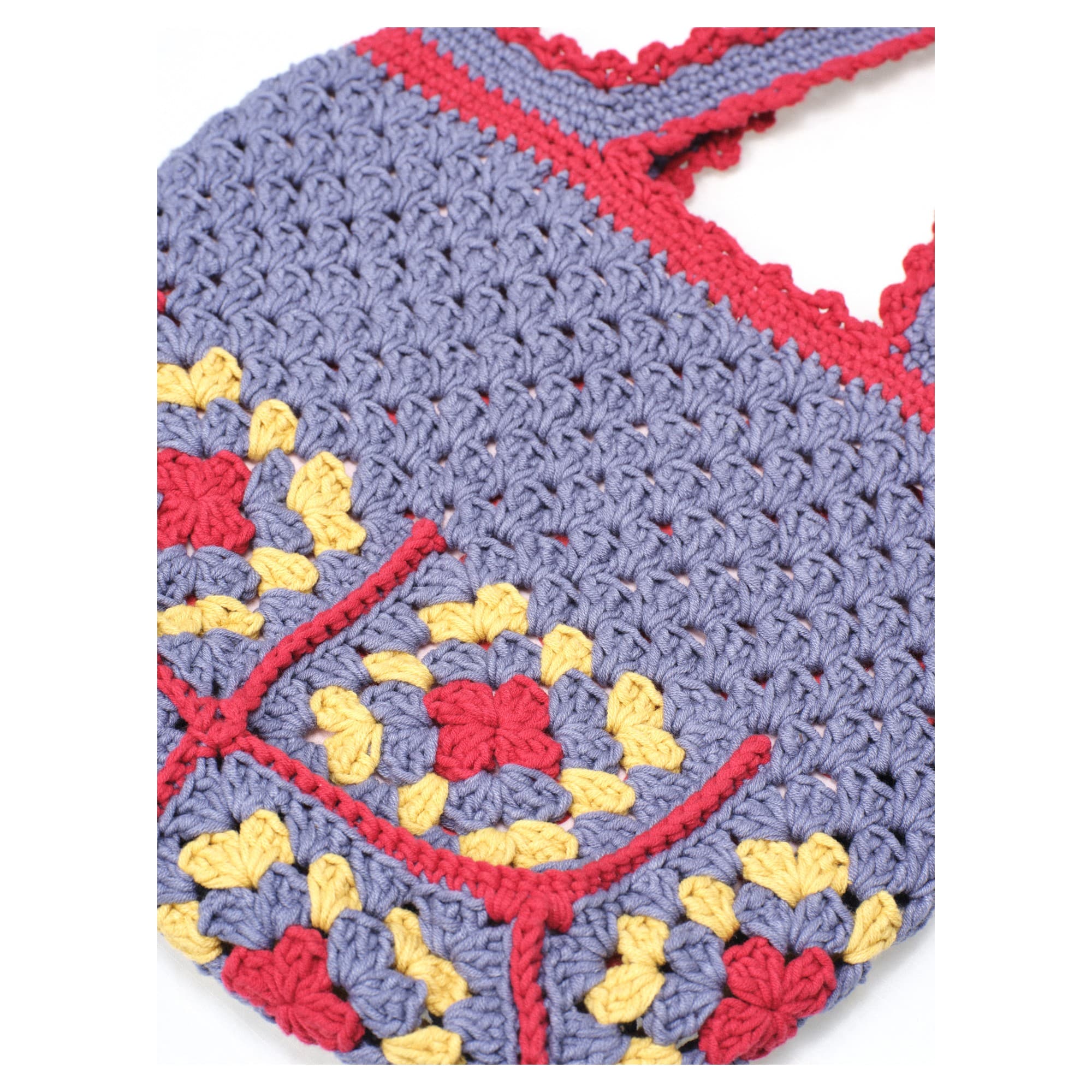
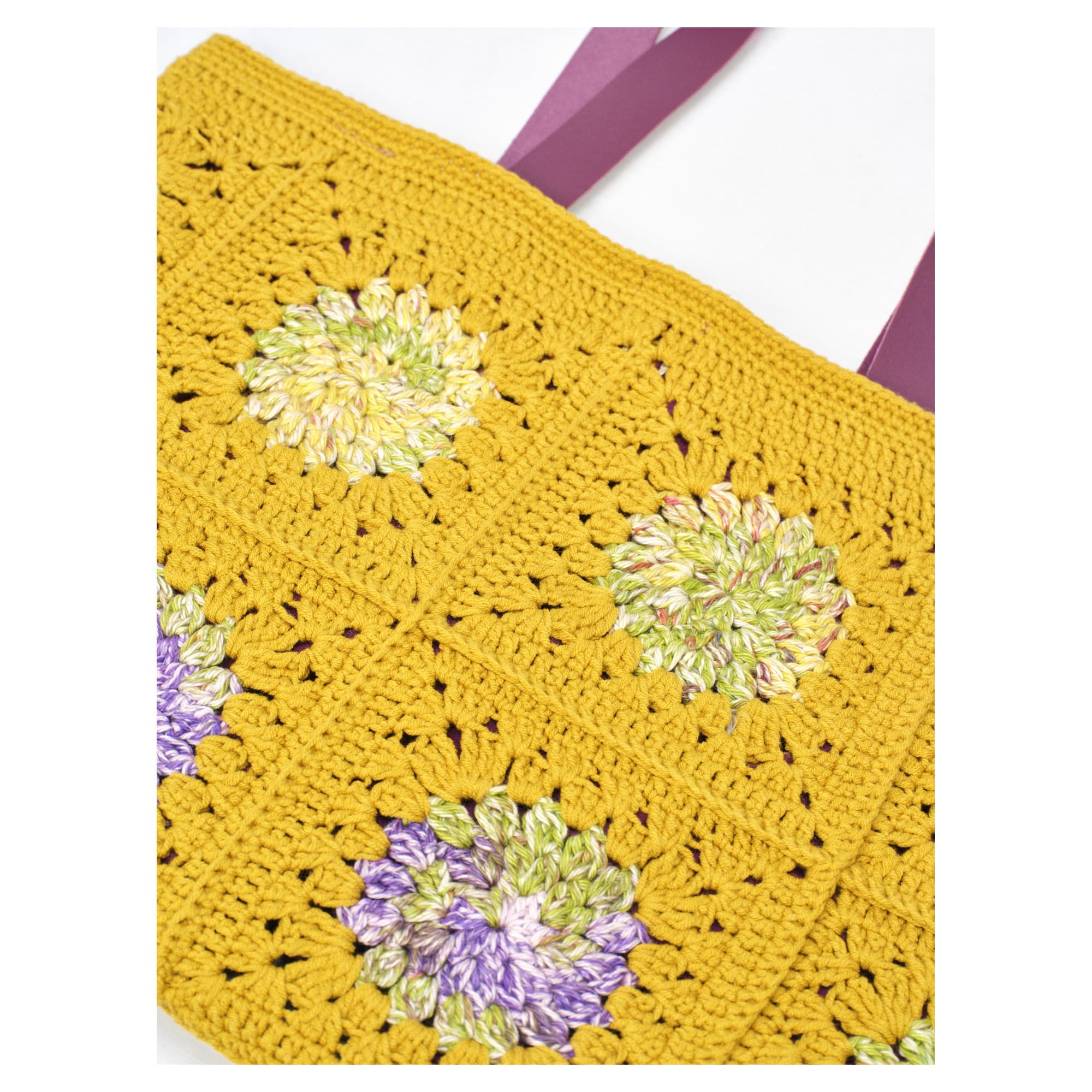
Every bag starts with granny squares. The basic pattern is simple enough that you could teach it to a teenager in an afternoon — three chains, slip stitch into a ring, then rounds of double crochets separated by chain-2 corners. My grandmother worked the same stitch. The pattern hasn't changed. What changes is everything that happens around it.
For bags, I use a 5mm hook and 100% mercerised cotton. Mercerised cotton has a slight sheen and holds colour well, which matters when you're putting together twenty different shades in a single bag. Most patterns suggest a 5.5mm or 6mm hook for a more relaxed fabric, but for bags I want the fabric to hold its shape under weight. A loose square looks lovely flat. Fill it with a water bottle and a wallet and it collapses.
The tension question
The tension is the thing that takes the longest to learn. Too tight and the squares curl inward at the corners. Too loose and the joins open up. I spent about six months adjusting before I found a rhythm that was consistent. Now I can tell within the first two rounds of a square whether something is off.
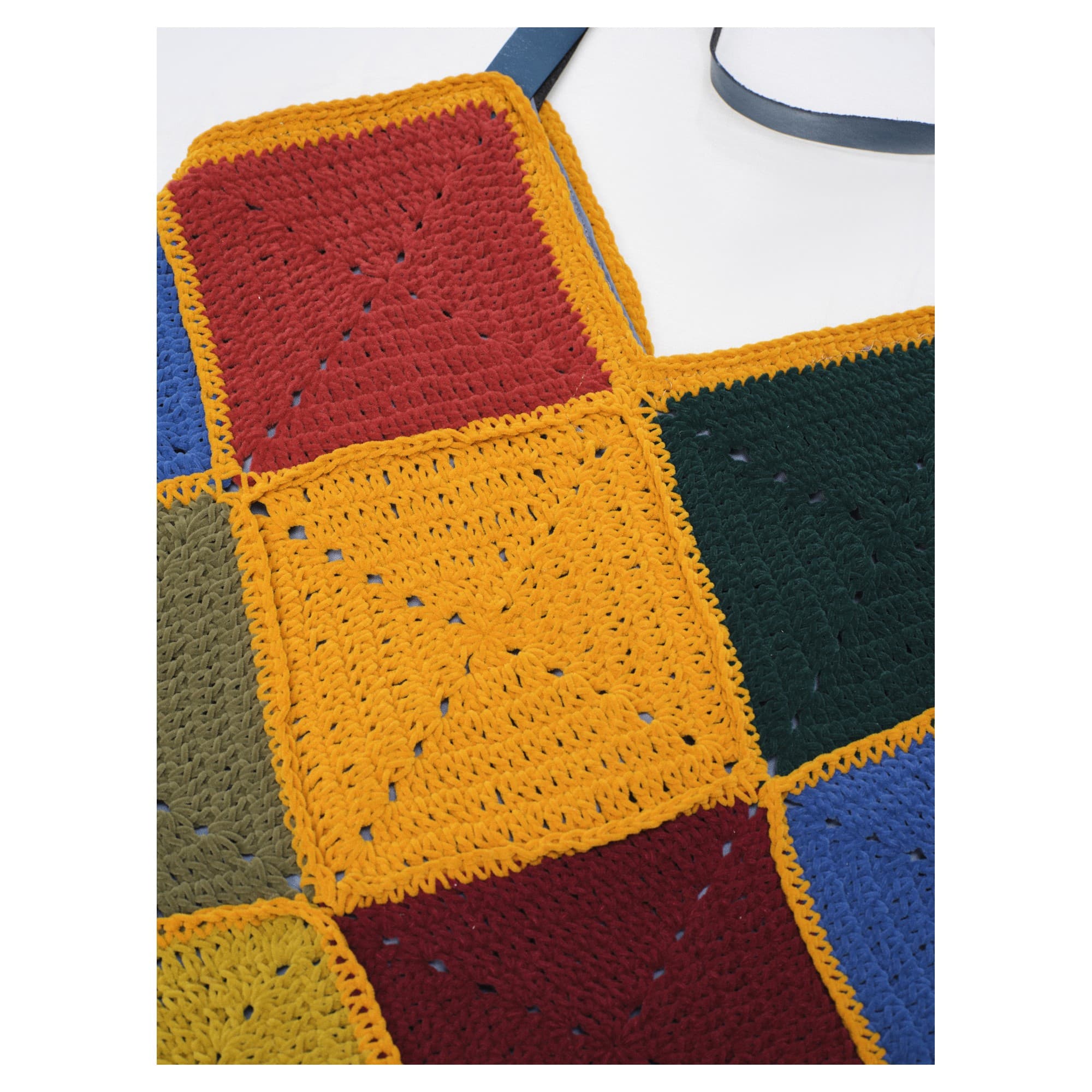
I usually make all the squares for a bag before joining any of them. A medium tote might need thirty to forty squares, depending on the design. I lay them out on a flat surface and look at the colour arrangement for a while before I commit. The same colours look completely different next to each other versus spread across a bag, and once you've started joining, changes become expensive.
How joining works
For joining, I use what's called the join-as-you-go method on most pieces. You work the last round of each new square directly into the corresponding loops of the neighbouring square, so the seam is part of the construction rather than an afterthought. The alternative is to join finished squares with a separate seam, which can look either very tidy or a bit obvious depending on execution. I prefer JAYG for a cleaner result, though it requires planning the colour sequence before you start.
Colour decisions
Colour is where people get themselves in trouble. I see bags with seven or eight colours crammed in. The intention is good; the result is busy. For most of my bags, I work with three to five colours maximum, and I start by deciding which one does the least work. That's usually the joining colour, the one between motifs. Get that one wrong and the whole thing looks like a mess, no matter how beautiful the individual squares are.
I get colour ideas from the city. In Istanbul in October, the afternoon light turns everything amber. Most of my earthy combinations come from looking at what that light does to stone buildings. Some of my blues came from standing in the Rüstem Pasha Mosque for twenty minutes looking at the tilework.
The lining matters more than people think
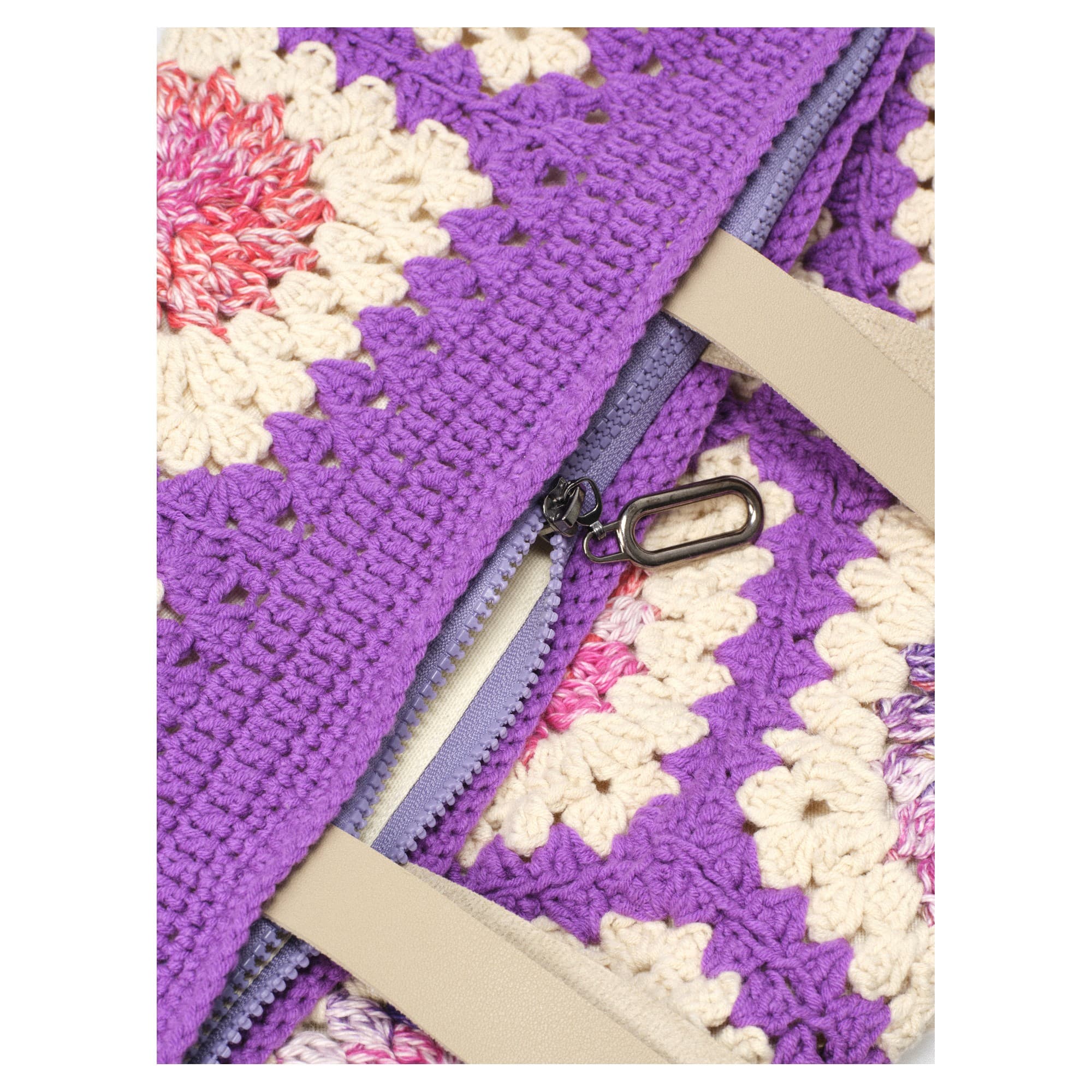
After joining comes the handles and lining. Most handmade bags skip the lining, which I find strange. You spend thirty hours making something beautiful and then leave the inside unfinished? My bags are lined in cotton fabric, hand-sewn with a hidden stitch, in a colour chosen to complement the crochet. The lining is what you see when you open the bag, and it gives structure. Without it, the bag feels like a craft project. With it, it feels like something you'd actually buy.
Leather handles are sourced from a supplier near the Grand Bazaar who's been there longer than I've been alive. I cut and punch the holes myself and attach the handles with a saddle stitch. Getting this wrong once is enough to make you extremely careful about it the second time.
The whole process, from first square to finished bag, takes between eight and twenty hours. The totes are on the longer end. A small crossbody might take eight if everything goes well. When people ask why they're priced the way they are, this is the answer.
If any of this gives you a sense of what goes into these bags, you can see the current collection on Etsy.
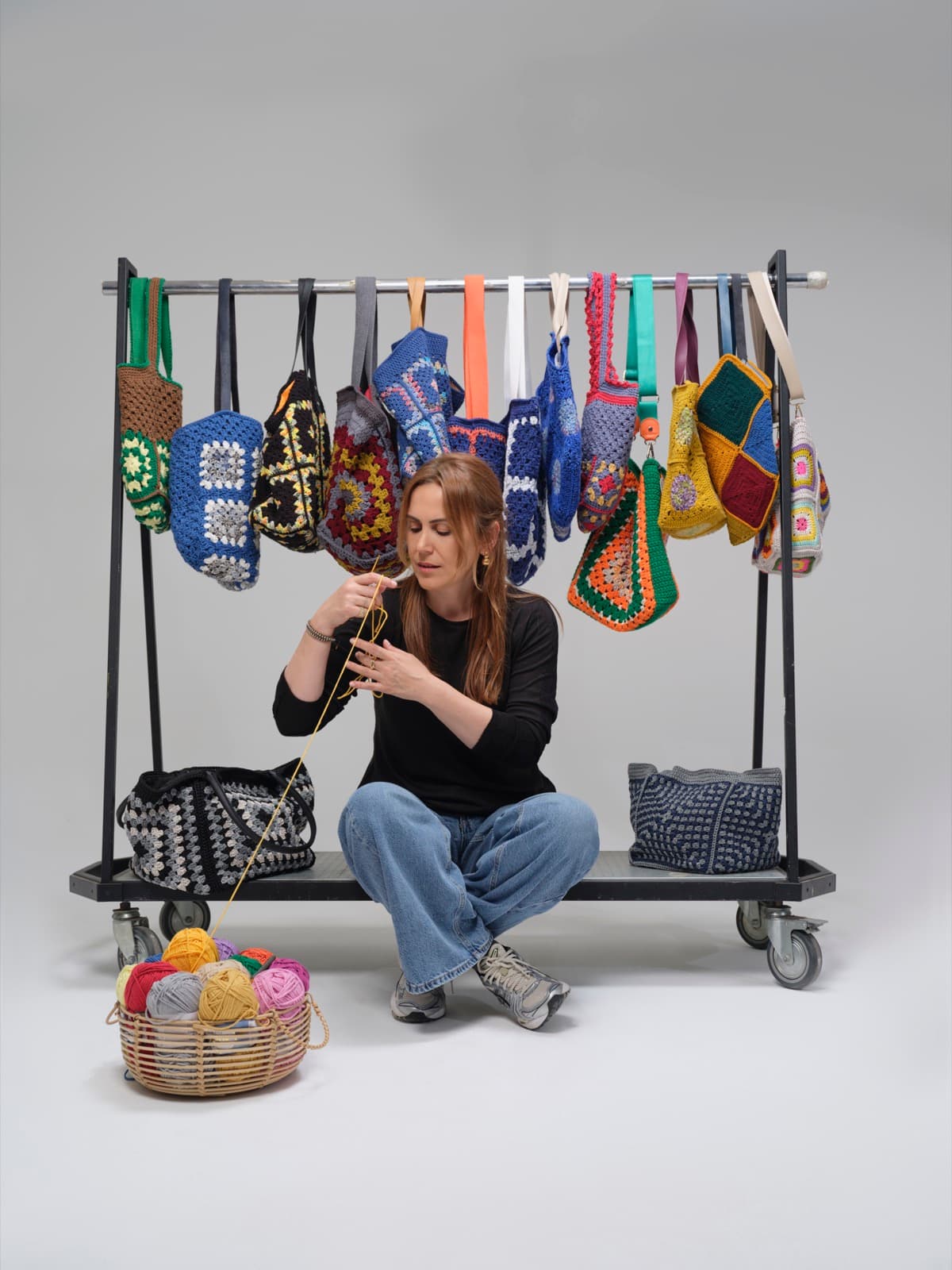
Merve Yamak
Founder, My Happy Made · Istanbul